One journal instead of scattered notes
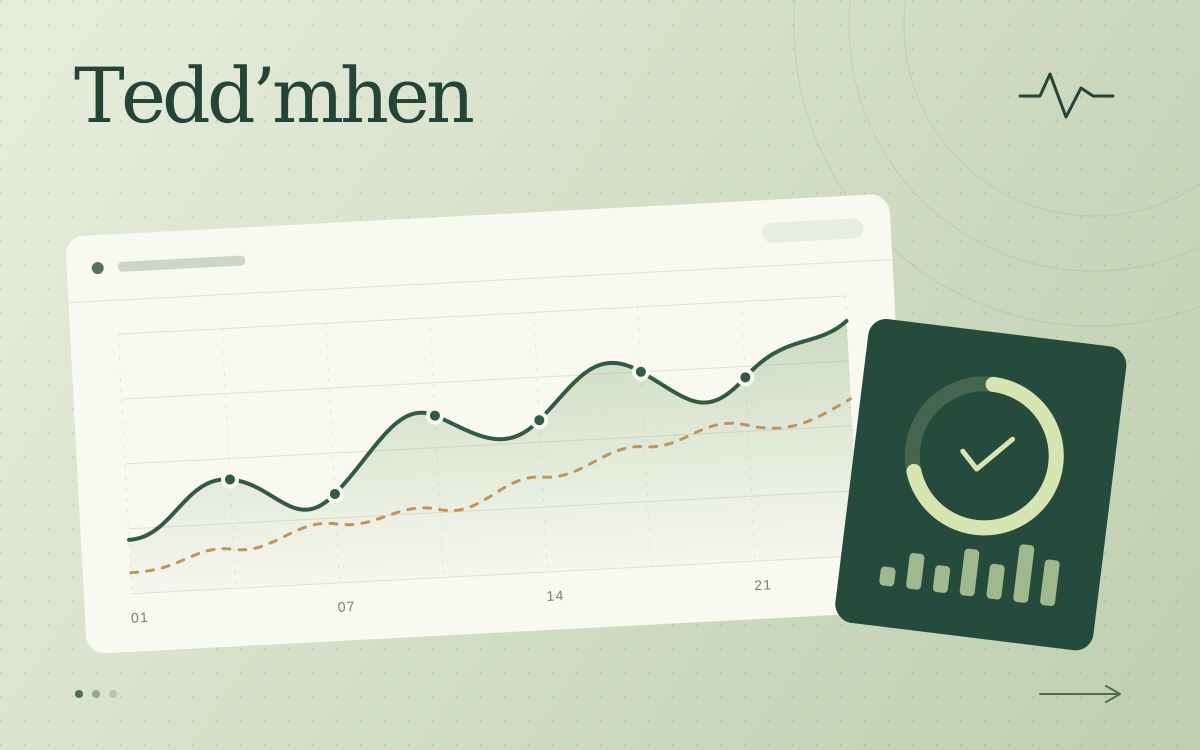
Tedd’mhen brings training, sleep, recovery and wellbeing into a single daily record. It grew from a need to compare personal observations over time: training load with subsequent sleep, habits with wellbeing, or training consistency with a longer trend.
It connects to my separate hybrid training project: developing endurance while maintaining strength from powerlifting. My interest in sport and longevity creates a practical need to track training and recovery continuously.
Records include numeric ratings, sleep and physiology, training sessions and notes. Choose from 150 sports and 40 habit presets, add custom activities, and record their counts or times. Form layouts and blank routines are saved to the account so daily entry does not require setting everything up again.
Working with observations
The journal filters observations by dates, text, training type and illness context. Unusual values require explicit confirmation before saving. Missing measurements remain missing rather than becoming zero.
Analysis compares parameters on the same day or with a calendar lag. For example, Monday’s training can be paired with sleep recorded on Tuesday. Available views include Pearson and Spearman correlations, detrended relationships, and means over complete 7- and 28-day windows.
Models with visible uncertainty
Bayesian models describe a single-variable trend or estimate one outcome from several inputs. Charts distinguish the estimated mean from uncertainty for an individual observation. Exploratory forecasts extend up to 28 days, with chronological evaluation against later observations.
This is observational analysis. Correlation does not establish a cause, and intervals depend on the model assumptions and the quality of recorded data. The methodology documentation explains equations, calendar alignment and limitations.
Implementation and portable records
The interface uses React and TypeScript. A Cloudflare Worker handles the API, D1 stores journal records, and statistical calculations run in a browser Web Worker. Imports provide a review before saving. Exports let you choose dates and fields, then download JSON, NDJSON, CSV or Markdown.
The public demo uses synthetic data. You can explore the journal and analysis without creating an account; demo edits are temporary. The repository contains source, tests and architecture notes, with full documentation on GitHub Pages.